


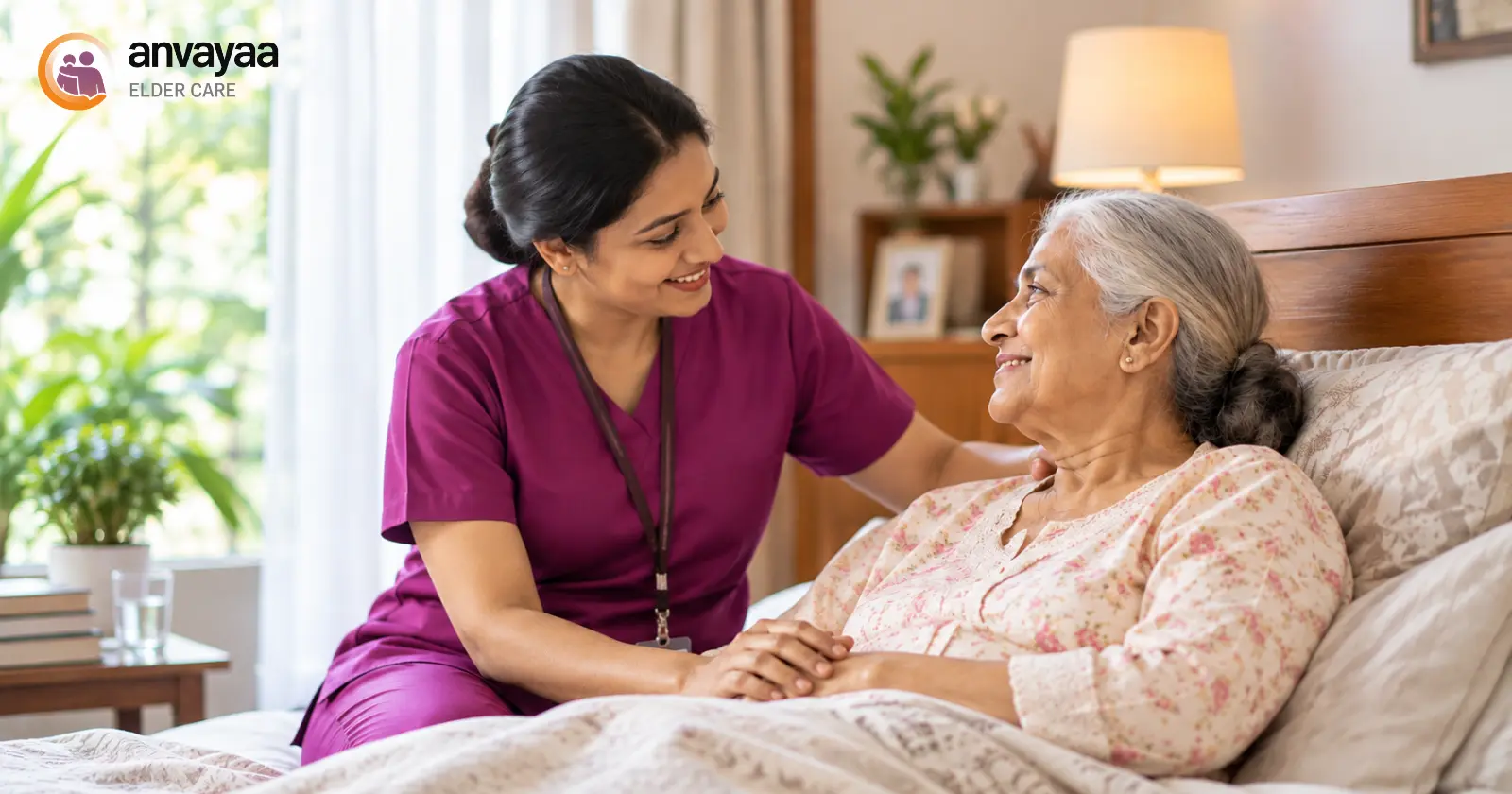
As the name implies, in-home nursing care consists of a wide range of healthcare services that can be availed from the comfort of your own house without having to risk a trip to the hospital. It is extremely beneficial for patients who are susceptible to diseases or any kind of travel-related health hazards. Most of the families that consist of a person in requirement of constant care opt for nursing services at home. A qualified nurse at home usually tends to develop an emotional bond with their patient and the family, which in turn would lead to a more tender, caring and empathetic way of treatment, when compared to the stoic and professional treatment administered by the doctors on their frequent visits to the hospital.
Benefits of Home Nursing Services for Seniors
- Making sure the patient takes his/her medicines or injections on time
- A much more personalized, one-to-one care and support
- Manages fluctuating health conditions, which in turn will lead to the prevention of unnecessary hospitalization.
- Regular and constant checkups from the comfort of their own homes
- Educating the patient about self-care
- Taking care of the elderly while their sons/daughters go to work
- Therapeutic companionship for widows/widowers.
- Assistance with household chores
Due to the steep rise in hospital charges, the demand for home nursing services had risen exponentially in the past year. The prices vary from city to city. A nurse at home in Bangalore may cost higher than a nurse at home in Chennai, depending on the services availed.
The number of home care services a patient can receive at home is limitless. With the rise in covid cases and with the high risk of transmission, more and more families are opting for home nursing services instead of hospitalization. And with the added advantage of the patient receiving treatment in the familiarity of his/her own house, the mental state of the patient tends to be much happier than someone who is hospitalized.
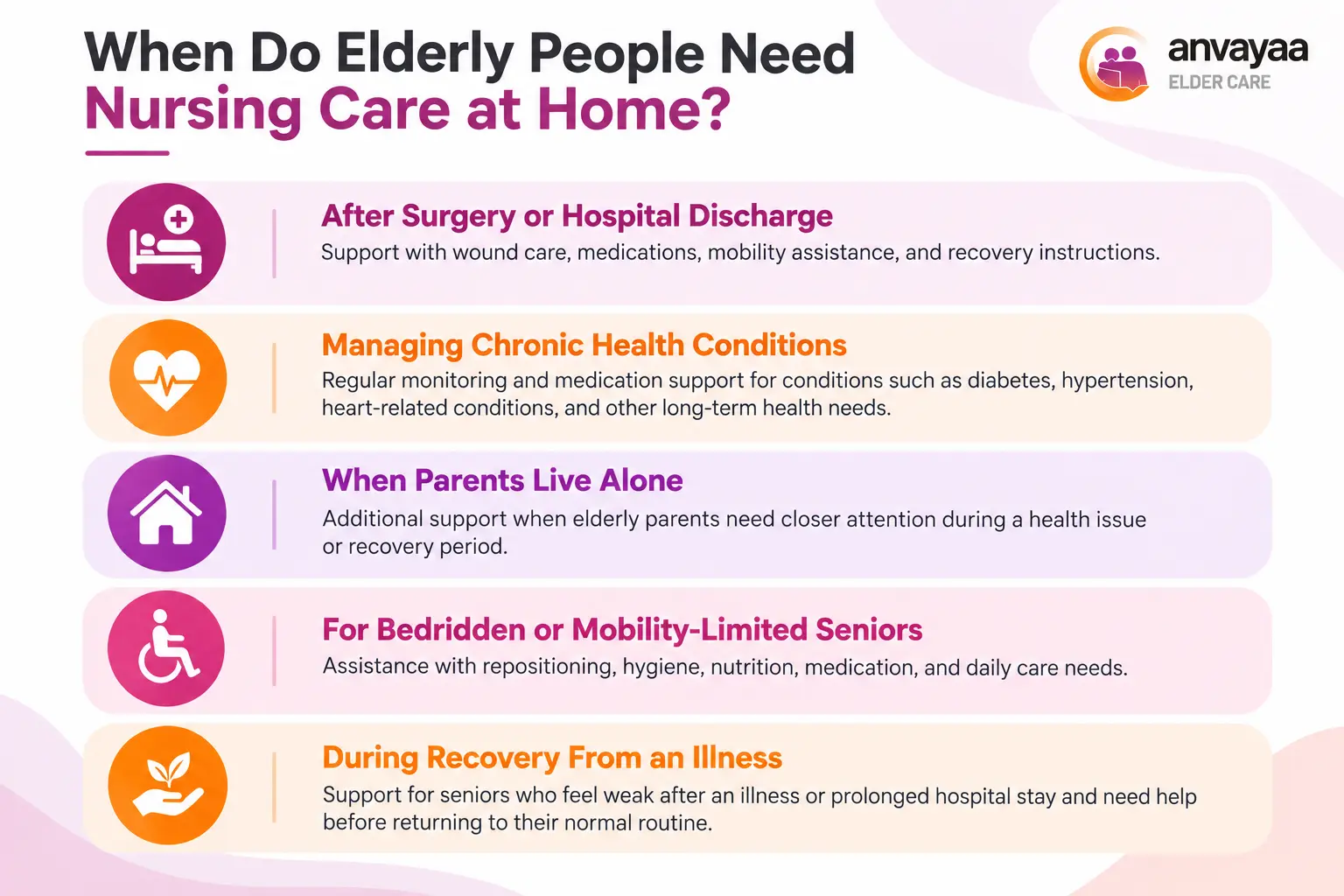
When Do Elderly People Need Nursing Care at Home?
In-home nursing care
Home nursing isn’t only for people who are bedridden. There are several everyday situations where professional nursing support can make a significant difference.
After Surgery or Hospital Discharge: An elderly person may return home after surgery but still require assistance with wound care, medications, mobility, and follow-up instructions.
For example, an elderly parent recovering from knee replacement surgery may need help with medication schedules, mobility assistance, dressing changes, and monitoring recovery. A home nurse can provide appropriate nursing support while the family coordinates with the treating doctor.
Managing Chronic Health Conditions: Older adults living with conditions such as diabetes, hypertension, heart-related conditions, or other long-term illnesses may require regular monitoring and medication support.
Having a trained nurse at home can make it easier to maintain a consistent care routine and identify changes that should be discussed with the patient’s doctor.
When Parents Live Alone: Many elderly parents live independently while their children work in another city or country. They may manage their daily activities themselves but struggle when a health issue suddenly arises. A home nursing service can provide additional support during periods when their health requires closer attention.
Caring for Bedridden or Mobility-Limited Seniors: Elderly people with limited mobility may need assistance with repositioning, hygiene, medication, nutrition, and other aspects of daily care.
Regular nursing support can help families manage these responsibilities more systematically while reducing the burden on the primary family caregiver.
During Recovery From an Illness: After an illness or prolonged hospital stay, seniors may feel weak and require additional support before returning to their normal routine.
Instead of repeatedly travelling to a hospital for routine care, appropriate nursing services can be arranged at home based on the patient’s medical requirements.
How Home Nursing Helps NRI Families
For an NRI, one of the most difficult situations is knowing that their parents need additional care while they are thousands of kilometers away.
You may receive a phone call saying:
“Mom has been feeling weak for the last few days.”
Or your parent may be recovering from surgery while you are unable to travel immediately.
In these situations, the challenge isn’t only arranging a nurse. It is knowing whether your parent is receiving the right support and whether their changing health needs are being communicated properly.
Professional home care can help families by providing support at the parent’s residence and keeping family members informed about relevant care updates.
For NRI families, this can be particularly helpful when:
- Parents live alone.
- A parent has recently been discharged from hospital.
- Regular medication support is required.
- Parents need assistance during recovery.
- Mobility has become difficult.
- Regular health monitoring is recommended.
- Children cannot travel frequently to India.
- A family member needs additional support in managing an elderly parent’s care.
Anvayaa Elder Care can help bridge the distance between elderly parents in India and their children living abroad by coordinating personalized care and keeping families connected with their parents’ care journey.
Home Nursing vs. Regular Caregiver: What’s the Difference?
This is an important distinction that your current blog should include.
A caregiver primarily assists with everyday activities such as bathing, dressing, mobility, meals, companionship, and household-related support.
A qualified nurse can provide nursing-related care within their professional scope, such as medication administration where prescribed and permitted, wound care, monitoring vital signs, post-operative nursing support, and communicating relevant health observations to the family or healthcare team.
The appropriate service depends on the senior’s health condition and care requirements. In some situations, families may need both nursing and caregiver support.
FAQs
1. What is in-home nursing care?
In-home nursing care provides professional nursing support to patients in their own homes. Depending on the patient’s condition and prescribed care plan, services may include medication support, wound care, monitoring, post-operative care, and other nursing-related assistance.
2. Is home nursing suitable for elderly people?
Yes. Home nursing can be useful for seniors recovering from illness or surgery, managing chronic health conditions, experiencing reduced mobility, or requiring regular nursing support.
3. What is the difference between a home nurse and a caregiver?
A home nurse provides professional nursing care within their qualifications and scope, while a caregiver generally focuses on daily living assistance, personal care, mobility, meals, and companionship.
4. Can NRI children arrange nursing care for their parents in India?
Yes. NRI families can arrange professional home care and nursing support for their parents in India when they are unable to be physically present.
5. Can home nursing help after surgery?
Yes. Depending on the doctor’s recommendations, home nursing may support recovery through services such as wound care, medication-related assistance, monitoring, and other prescribed nursing requirements.
6. How can Anvayaa help NRI families caring for parents in India?
Anvayaa provides coordinated elder care support that can help NRI families manage their parents’ care from a distance, including healthcare coordination, home care and nursing support based on the senior’s individual needs. For more info, Contact Anvayaa Elder Care in Hyderabad. Call:+91 72888 18181 / +91 93926 82922, For USA Enquiry : +1 989 2682922
0 Comments