


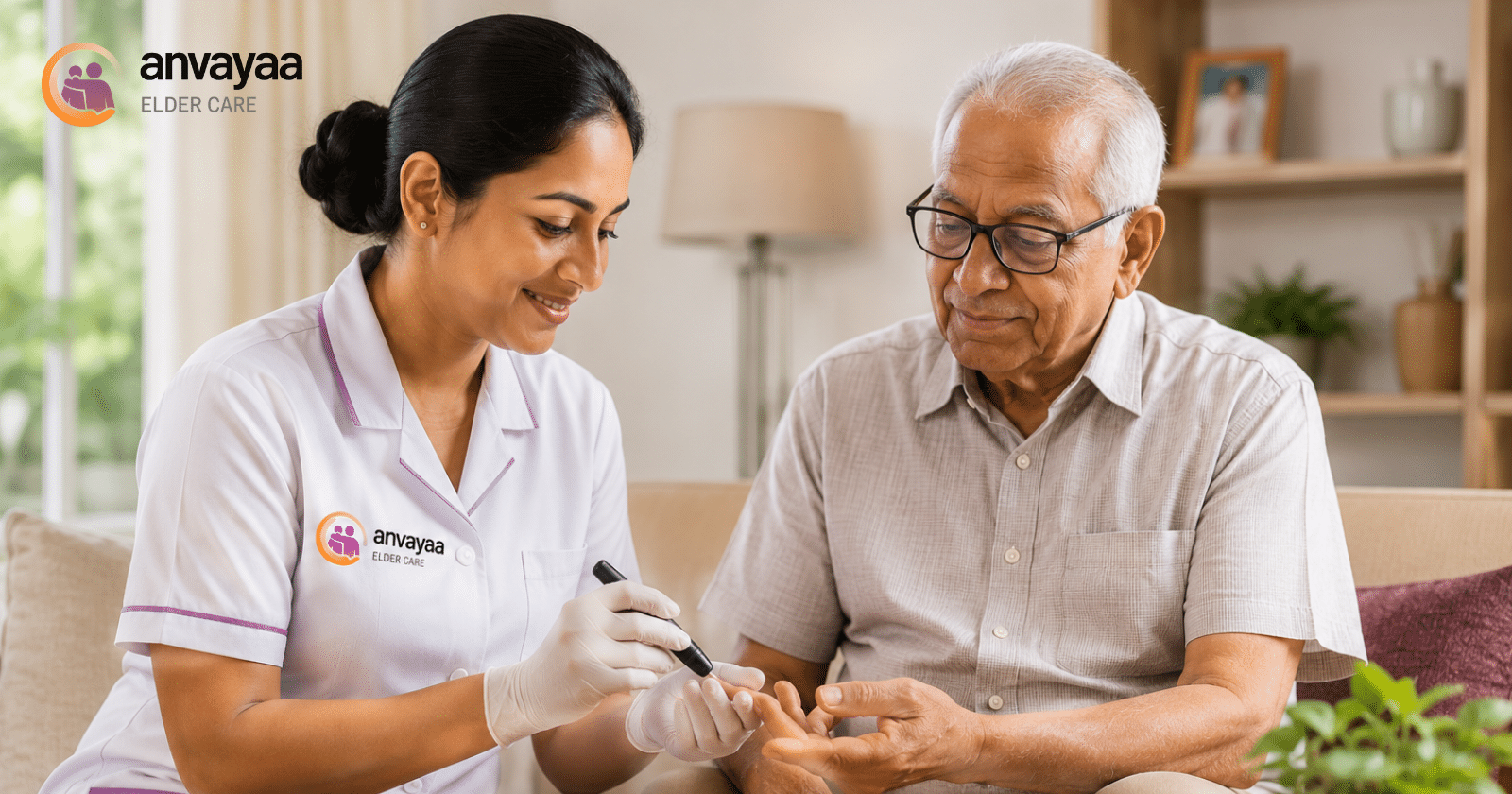
Managing a chronic condition like diabetes is a full-time job. For our elderly parents and grandparents, this responsibility becomes significantly harder due to age-related challenges like fading vision, memory slips, or stiff joints from arthritis. A task as vital as drawing the exact dose of insulin into a syringe or reading a tiny digital glucometer screen can feel like a mountain to climb.
At Anvayaa Elder Care, we see this struggle daily. Families living miles away or managing demanding careers constantly worry: Did Appa take his morning medicine? Did Amma skip a meal because she didn’t feel like cooking, causing her blood sugar to crash?
This is where professional nursing care for elders at home steps in, transforming a stressful clinical routine into a safe, manageable, and comforting daily life.
Why Managing Diabetes is Harder for Seniors
Diabetes behaves differently as we age. In younger adults, the symptoms of high or low blood sugar are usually obvious. In seniors, a sudden drop in blood sugar (hypoglycemia) might not present as sweating or shaking. Instead, it might look like sudden confusion, dizziness, or a minor slip in coordination—which is easily mistaken for general old age but can lead to dangerous falls or fainting.
Furthermore, many seniors juggle multiple prescriptions for blood pressure, cholesterol, or joint pain. Managing “pill fatigue” and avoiding accidental double-dosing requires precise tracking. Dedicated nursing services at home act as a clinical shield, ensuring that vitals are tracked accurately and health risks are intercepted long before they turn into midnight emergency room visits.
The Lifeline: The Intimate Relationship Between Nursing Care & Diabetes
The relationship between nursing care and diabetes management is deeply collaborative and dynamic. Diabetes is not a static condition that can be managed with a “set-and-forget” prescription; it is a highly volatile, fluid illness that changes based on daily stress, sleep quality, minor infections, and dietary variations. A home nurse serves as an active, living clinical monitor who bridges the massive gap between a doctor’s occasional clinic visits and the reality of day-to-day survival at home.
When an elder manages diabetes alone, they are often reactive—only realizing something is wrong when they feel profoundly dizzy, thirsty, or weak. A professional nurse shifts this dynamic from reactive crisis management to proactive prevention. Because nurses understand the pathophysiology of the disease, they recognize the subtle micro-signals of trouble.
They catch a slight change in an elder’s cognitive sharpness that points to a crashing sugar level, or notice a tiny patch of dry, peeling skin on a heel before it cracks open and becomes infected. They understand how insulin mirrors carbohydrate intake, ensuring that medication is never given if an elder refuses to eat their meal. This constant, vigilant oversight takes the guesswork out of diabetes and replaces it with clinical stability.
The Core Pillars of In-Home Diabetes Management
Professional home nurses bring a structured yet compassionate approach to managing chronic illnesses. Here is how they turn complex medical plans into simple, stress-free routines:
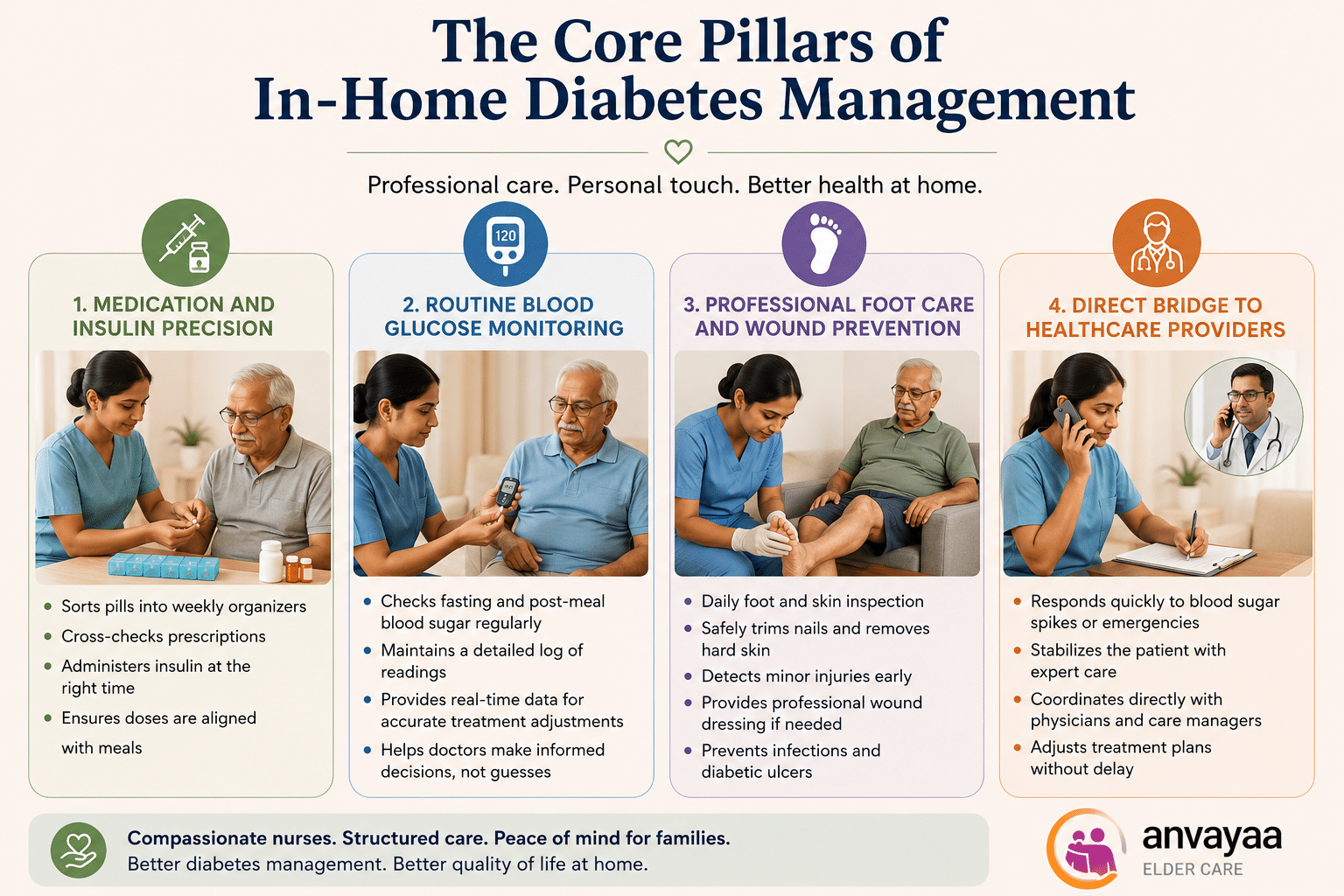
- Medication and Insulin Precision: Taking the wrong dosage of diabetes medication can be life-threatening. A home nurse takes over the heavy lifting of sorting pills into weekly organizers, cross-checking prescriptions, and administering insulin injections at the exact times required, usually aligned with meals.
- Routine Blood Glucose Monitoring: Blood sugar levels fluctuate based on stress, sleep, and food. A home nurse maintains a meticulously documented log of fasting and post-meal glucose readings. This real-time data is invaluable because when your family doctor reviews it, they can make highly accurate adjustments to the treatment plan rather than guessing based on a single laboratory test.
- Professional Foot Care and Wound Prevention: Diabetes reduces blood circulation and causes nerve damage (neuropathy), particularly in the feet. A senior might step on a small pebble or develop a minor blister and literally not feel it. Left unnoticed, these tiny scrapes can quietly develop into deep, slow-healing diabetic ulcers. Nurses perform daily skin and foot checks, trim nails safely, and handle professional wound dressing if an injury occurs.
- Direct Bridge to Healthcare Providers: If an elderly parent’s blood sugar spikes unexpectedly, a family member might panic, unsure whether to wait it out or rush to the hospital. A trained home nurse knows exactly how to respond, stabilizes the patient, and coordinates directly with the primary physician or Anvayaa’s dedicated Care Managers to adjust the dosage immediately.
How Professional Care Impacts the Speed of Recovery
While diabetes is a lifelong chronic condition rather than an illness you “cure,” seniors frequently face acute health setbacks related to it—such as surgical wounds that refuse to heal, severe urinary tract infections, or recovery from a cardiac event or stroke. In these critical phases, the presence of dedicated home nursing dramatically accelerates the speed of recovery.
1. Accelerated Wound Healing
High blood glucose impairs white blood cell function, stalling the body’s natural healing mechanisms. A home nurse actively flushes out excess glucose variance while providing sterile, specialized dressing changes. Keeping blood sugar strictly within the target range can cut the healing time of diabetic ulcers and surgical incisions in half, preventing minor wounds from turning into amputations.
2. Preventing the Yo-Yo Effect
When seniors return home from a hospital stay, their routines are disrupted. Sudden spikes and crashes in blood sugar stall physical rehabilitation and drain an elder’s physical energy. By stabilizing daily glycemic levels, nurses ensure the body has a steady, reliable source of cellular energy, allowing seniors to participate effectively in physiotherapy and regain their strength much faster.
3. Drastic Reduction in Hospital Readmissions
The first 30 days after a hospital discharge are the most dangerous for a senior. Medication errors, skipped doses, and dietary confusion frequently cause relapse. Home nursing care ensures strict adherence to the new recovery protocol, effectively dropping the risk of emergency re-hospitalization.
Finding the Right Balance: Flexibility and Affordability
Every family’s situation is unique, and so are the medical needs of every senior. For an elder who is relatively independent but struggles with memory or complex insulin regimes, a nurse visiting once or twice a day to check vitals, administer shots, and organize medications is often the perfect fit. This focused approach provides families with affordable nursing care that targets the exact clinical gaps without straining the household budget.
However, if a senior is recovering from a major surgical procedure, a stroke, or is managing advanced diabetic complications alongside cognitive conditions like dementia, their needs change drastically. Sudden drops in blood sugar can happen in the dead of night. For these high-risk scenarios, securing 24/7 nursing care offers unmatched safety. Having a trained professional staying at the bedside around the clock means that if an emergency arises at 3:00 AM, immediate clinical action is taken, and help is dispatched instantly.
Conclusion
Managing diabetes in seniors is ultimately a balancing act that requires clinical precision, constant vigilance, and deep patience. When families rely solely on self-care or untrained assistance, the risk of dangerous complications, sudden hospitalizations, and prolonged recovery times climbs drastically.
By integrating professional nursing care for elders at home, families can successfully offload the complex burdens of glucose monitoring, insulin adjustments, and preventative foot care. Whether a family utilizes affordable nursing care for targeted daytime support or secures 24/7 nursing care for high-risk, around-the-clock medical monitoring, the presence of a trained professional fundamentally alters the course of the illness.
For the elders at Anvayaa Elder Care, these nursing services at home do more than just manage a medical checklist—they stabilize health, accelerate physical recovery, prevent critical emergencies, and give long-distance families the invaluable peace of mind that their loved ones are safe, protected, and thriving in the comfort of their own homes.
0 Comments