


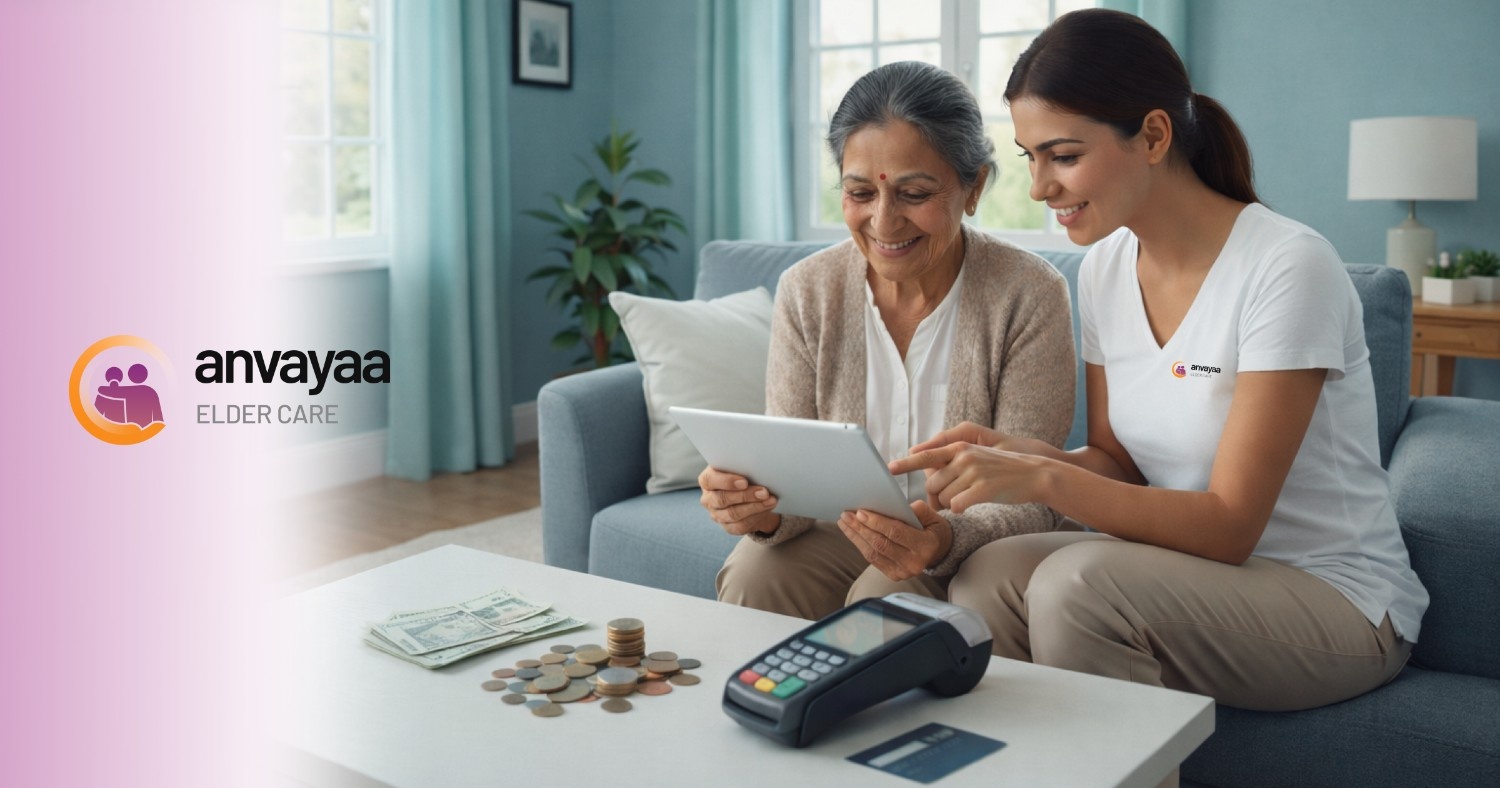
As our parents age, we want them to live with dignity, independence, and security. Yet one everyday activity—handling cash—can quietly expose them to financial risk, emotional stress, and even loss of trust in their own abilities.
For many families in India, especially those with elderly parents living alone or with NRI children abroad, elderly financial safety in India has become a growing concern. It’s not just about the money. It’s about protecting their peace of mind, their confidence, and their right to live without fear.
In this article, we’ll explore the real financial risks for senior citizens when it comes to cash handling, and introduce a safer, more dignified alternative that keeps families connected and elders protected.
The Hidden Dangers of Cash: Why Seniors Are Vulnerable
Cash has been the backbone of Indian households for generations. But for seniors, especially those living independently, managing physical currency comes with challenges that younger family members may not always see.
1. Theft and Loss at Home
Many elders prefer keeping cash at home for convenience—whether it’s for groceries, medical bills, or household help. Unfortunately, this practice makes them easy targets.
Consider a common situation: an elderly parent living alone in a two-bedroom flat keeps ₹10,000–₹15,000 in a drawer for monthly expenses. A new domestic helper, cleaner, or someone posing as a meter reader may notice this habit. Over time, small amounts go missing. The senior may not even realize it immediately—or worse, they may blame themselves for being forgetful.
This isn’t about mistrusting help. It’s about acknowledging that cash at home is difficult to track, and elderly parents money can be misused silently, without confrontation or proof.
2. Forgetfulness and Misplacement
Aging brings changes in memory and attention. A retired teacher in Hyderabad might withdraw ₹5,000 from the ATM, place it somewhere “safe,” and later forget where. Hours—or days—of searching follow, often with no result.
This isn’t just a financial loss. It’s a blow to their confidence. Elders start doubting themselves, feeling embarrassed, even ashamed. They may hesitate to tell their children, fearing judgment or being labeled “incapable.”
3. Fake Helpers and Unauthorized Collectors
A familiar scenario seen across many Indian cities: someone rings the doorbell claiming to be from the electricity board, water department, or telecom provider. They say there’s an outstanding bill and demand immediate cash payment.
Many seniors, unfamiliar with digital billing or wary of service disconnection, comply—only to realize later it was a scam. These fraudsters are skilled, polite, and convincing. They prey on trust and urgency.
4. ATM and Bank Vulnerabilities
Visiting an ATM or bank branch can feel overwhelming for seniors, especially those with mobility or vision challenges. In a typical situation, an elderly person may accept “help” from a stranger at the ATM—someone who offers to insert the card, enter the PIN, or check the balance.
What seems like kindness can turn into theft within seconds. Card swapping, PIN theft, or even physical intimidation can occur in these moments of vulnerability.
5. Stress of Daily Cash Management
Beyond fraud, there’s the sheer exhaustion of managing cash daily. Calculating change, keeping track of expenses, ensuring enough cash is available for the cook, cleaner, and driver—it becomes a cognitive burden.
For seniors managing chronic conditions like diabetes or heart disease, this added stress affects not just finances but overall well-being.
The Emotional Toll: More Than Just Money
When we talk about financial problems faced by senior citizens, we often focus on the rupee value. But the emotional impact runs deeper.
Elders who lose money—whether through theft, scams, or forgetfulness—often experience:
- Shame and embarrassment: Feeling they’ve failed to protect what’s theirs
- Loss of independence: Worrying that the family will take over their finances entirely
- Fear and anxiety: Constantly vigilant, unable to trust anyone
- Isolation: Avoiding social interactions or help due to suspicion
For families, especially those living abroad or in different cities, the worry is constant. “Is my mother safe? Is someone taking advantage of her? Can she manage on her own?”
This is where senior citizen financial abuse prevention becomes not just practical, but urgent.
Myth vs Fact: Clearing Common Misconceptions
Myth: My parent is careful. They won’t fall for scams.
Fact: Scammers are trained to exploit politeness, trust, and confusion—not stupidity. Anyone can be vulnerable in the right circumstances.
Myth: Cash is safer than digital for seniors who don’t understand technology.
Fact: Physical cash is untraceable and unrecoverable. Digital systems, when supported properly, offer transparency and security that cash cannot.
Myth: Fraud only happens in big cities.
Fact: Financial exploitation of seniors happens everywhere—in metros, tier-2 cities, and even small towns. Vulnerability isn’t location-dependent.
Myth: If I handle my parents’ money, they’ll lose their independence.
Fact: True independence is about safety and dignity—not about insisting on outdated methods that expose them to harm.
A Safer, More Dignified Alternative: Rethinking Payments for Elders
So what’s the solution? How can we protect elderly parents without taking away their sense of control and autonomy?
The answer lies in managing elderly parents’ cash safely through systems that remove the need for physical currency while keeping them fully informed and empowered.
Introducing a Smarter Payment System: How It Works
Imagine a system where your elderly parent never has to worry about carrying cash, visiting ATMs, or verifying strangers at the door—but still has full visibility into every rupee spent on their behalf. Here’s how such a system works:
1. Family Members Add Funds Remotely
Whether you’re in Bangalore, Dubai, or New York, you can securely add funds to a designated account or app wallet meant specifically for your parents’ needs. This could cover groceries, medical bills, household help, utilities—anything they need.
2. Trusted Care Managers Make Verified Payments
Instead of your parent handling cash or cards, a trained and verified Care Manager—someone who works directly with your family—makes all necessary payments on their behalf.
These Care Managers are professionals, background-verified, and trained in elder care protocols. They accompany seniors to medical appointments, coordinate with vendors, and handle bill payments—all without the elder ever touching cash.
3. Complete Transparency for Families
Every transaction is recorded and visible. You receive detailed reports showing what was spent, when, where, and for what purpose. This means no surprises, no hidden charges, and no room for misuse.
4. No Exposure to Scams or Theft
Since there’s no cash at home and no need for ATM visits, the risk of theft, loss, or fraud drops dramatically. Fake collectors can’t demand money. Strangers can’t “help” at ATMs. And even if something goes wrong, the digital trail ensures accountability.
Real Benefits That Matter to Families
Let’s be clear: this isn’t about taking control away from elders. It’s about giving families the key to protect elders from frauds in India. It’s about tools that actually work—without compromising dignity. Here’s what families experience:
For Seniors:
- No stress of managing cash daily
- No fear of theft or loss at home
- No need to visit banks or ATMs
- Full knowledge of how their money is being spent
- Continued independence with support, not surveillance
For Families:
- Peace of mind, especially for those living far away
- Real-time visibility into expenses
- Reduced risk of elderly money misuse issues
- Professional support without hiring strangers
- Ability to help without being physically present
For Everyone:
- Protection from scams and fraud
- Financial transparency that builds trust
- A system that scales—whether it’s ₹5,000 or ₹50,000 per month
- Dignity preserved, safety prioritized
Why This Approach Aligns With Indian Family Values
In Indian culture, caring for aging parents isn’t optional—it’s a duty, a privilege, and an expression of love. But modern realities—distance, work commitments, global migration—make it harder to be physically present. A supported payment system bridges that gap. It allows you to fulfill your responsibility without hovering, to protect without controlling, and to care from anywhere in the world. It respects your parents’ autonomy while acknowledging their vulnerability. It’s not about mistrust—it’s about senior citizen financial abuse prevention done with compassion, not fear.
How to Get Started: Practical Steps for Families
If you’re concerned about your elderly parents’ financial safety, here’s what you can do:
- Have an honest conversation: Discuss their current challenges with cash—without judgment. Ask if they’ve felt unsafe, confused, or stressed.
- Explore supported payment options: Look into services that offer Care Manager-assisted transactions with family oversight.
- Start small: You don’t have to transition everything at once. Begin with recurring expenses like groceries or medical bills.
- Involve your parent: Explain how the system works, show them transaction reports, and let them ask questions. This is about empowerment, not exclusion.
- Monitor and adjust: Review spending patterns together. Make changes if something doesn’t feel right.
Final Thoughts: Safety Without Sacrifice
Elderly financial safety India isn’t just a policy issue—it’s a deeply personal one. Every family wants their aging parents to live with security, respect, and peace of mind. Cash handling, for all its familiarity, no longer offers that. The risks are real, the emotional toll is high, and the alternatives are now accessible. By choosing supported, transparent, and verified payment systems, families can protect their elders from financial risks for senior citizens without taking away their independence. Because the goal isn’t control. It’s care. And care, done right, looks like safety with dignity—love expressed through action, not just words.

0 Comments