



Caring for Parents Is a Duty, Not a Choice
At a time when stories of elder neglect are becoming harder to ignore, Hyderabad City Police Commissioner VC Sajjanar recently spoke with rare clarity and firmness on the subject. Addressing the abandonment and ill-treatment of elderly parents, he called such behaviour “unacceptable” and reminded families that caring for ageing parents is not a favour, but a responsibility.
“How parents are treated today will shape the values of the next generation. What we sow today, we will reap tomorrow,” he said, urging families to act with dignity, compassion, and respect.
The Commissioner also made it clear that neglect, whether physical, emotional, or financial, has legal consequences. Citing the Maintenance and Welfare of Parents and Senior Citizens Act, 2007, he reiterated that the law stands firmly on the side of senior citizens. Elderly parents facing neglect or abuse, he said, should not hesitate to approach the authorities.
His message reflects a wider shift in how elder care is being viewed today. It is no longer seen as a private family issue alone, but as a shared social and legal responsibility.
Strengthening Care Through Skilled Teams
Behind every dependable care experience is a team that is prepared, trained, and supported. Recently, Anvayaa brought its teams together for an outing that blended connection with learning. During this initiative, employees were awarded Dementia Care Certification, strengthening their ability to support seniors living with cognitive challenges.
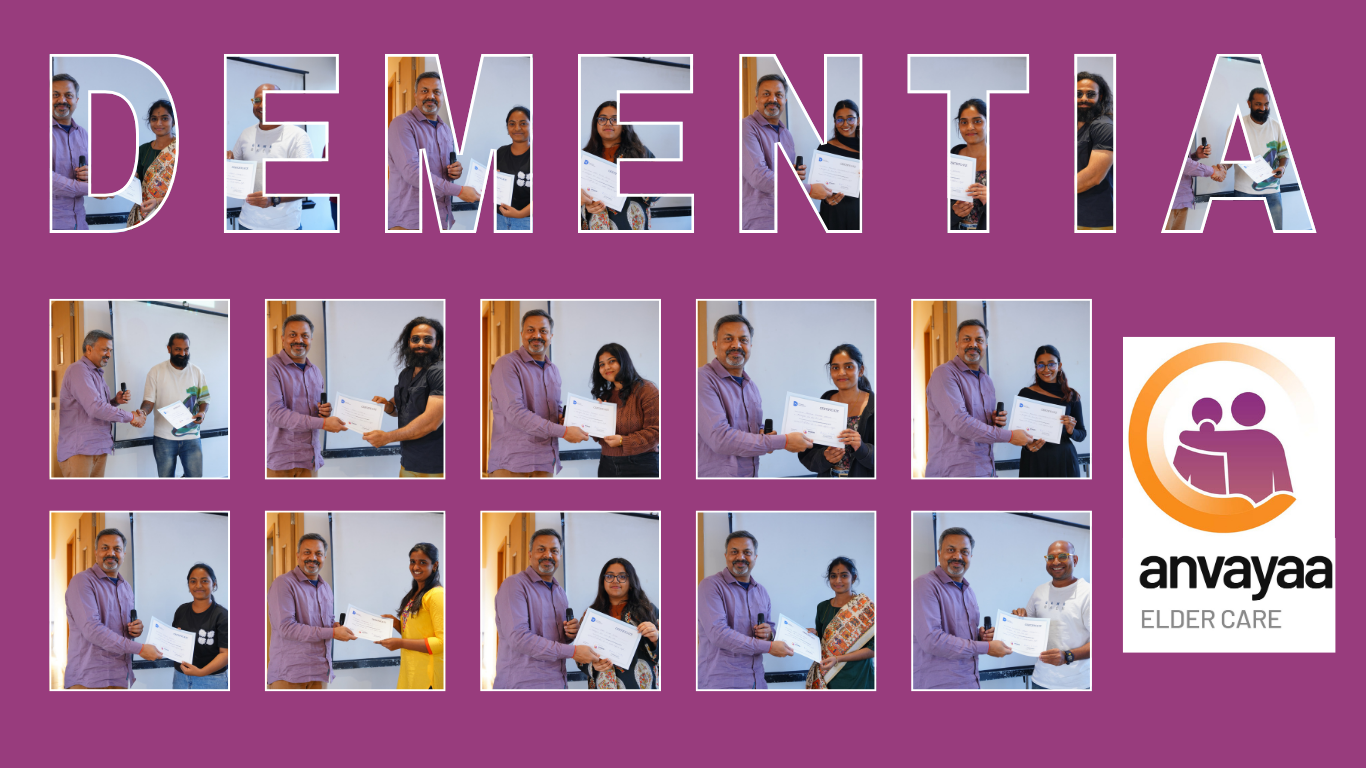
Dementia Care Certification
This milestone speaks to a simple belief Anvayaa holds closely. Good elder care does not happen by chance. It is built through continuous learning, hands-on understanding, and a deep respect for the complexity of ageing, especially in conditions like dementia.
Understanding Dementia Through Everyday Moments
Dementia rarely announces itself in dramatic ways. More often, it shows up in small moments. A forgotten routine. A repeated question. A sudden pause in a familiar conversation.
The Anvayaa Dementia App, available on the Apple App Store, is designed to help families and caregivers understand these everyday realities. Instead of overwhelming users with medical terminology, the app focuses on lived experiences. It walks users through common situations that people with dementia face, helping caregivers see the world through their eyes.
Through gentle guidance and simple interactions, the app encourages users to notice how small changes in response can make a big difference. A calmer tone. Aw/ clearer cue. A little more patience.
In practical terms, it helps caregivers learn how to:
- Notice early signs of cognitive distress
- Respond with empathy instead of frustration
- Handle day-to-day situations with more confidence
For many families, this becomes a first step toward understanding dementia not as a problem to manage, but as a condition that calls for patience, awareness, and care.
👉 The Dementia App can be explored via the Anvayaa website or directly through the Apple App Store.
Why Dementia-Aware Care Matters
Dementia affects far more than memory. It influences behaviour, communication, and the ability to manage everyday life. Supporting someone with dementia requires more than medical attention. It calls for structure, reassurance, and an environment that feels safe and familiar.
Trained caregivers play a crucial role here. They are often the first to notice signs of distress, changes in behaviour, or moments of confusion. With the right approach, they can help seniors maintain dignity and independence for as long as possible.
For families, dementia-aware care makes a tangible difference. When care is proactive rather than reactive, it reduces stress, prevents avoidable emergencies, and allows relationships to be shaped by understanding rather than constant worry.
When Caregiving Becomes a Second Job
A recent report featured by the Harvard Gazette sheds light on a reality many families quietly live with. Across the world, millions of working adults are managing full-time jobs while also caring for ageing parents.
The report highlights how caregiving affects more than emotions. It impacts productivity, career choices, financial stability, and long-term well-being. Yet, in most workplaces, this responsibility remains invisible.
As populations age, experts argue that families cannot be expected to shoulder this alone. Systems need to evolve to support people who are balancing work with elder care.
In India, the challenge is intensified by nuclear families, physical distance from parents, and limited access to structured support. It is within this context that services like Anvayaa Nishchint operate, offering coordinated, ongoing support for seniors while helping families stay informed and reassured. The goal is simple: to reduce the silent, daily uncertainty that working caregivers often carry.
India’s Ageing Population and the Need for Community-Based Support
India is ageing faster than ever before. Policy discussions at the national level increasingly point to the need for stronger, more organised eldercare systems that go beyond informal family arrangements.
Insights from public policy and civil services research consistently highlight key concerns:
- Longer life expectancy without matching growth in geriatric care infrastructure
- Greater vulnerability due to social isolation, especially among seniors living alone
- Gaps in last-mile access to healthcare, emergency response, and daily assistance
What emerges clearly from these analyses is the importance of community-based and preventive care models. Many seniors do not require institutional care, but they do need reliable support to live safely and with dignity.
Programmes like Anvayaa Abhay respond to this need by focusing on safety, emergency response, and immediate assistance for seniors living independently. They reflect a broader shift in eldercare thinking, moving from reactive solutions to support systems built around dignity, preparedness, and peace of mind.
0 Comments